CALGARY — Calgary’s resale housing market had its best January for sales since 2008 as average prices also climbed to their highest level ever for the month.
According to the Calgary Real Estate Board, total MLS sales in the city in January were 1,230, up 15.17 per cent from a year ago while the average sale price rose by 12.34 per cent cent to $439,671.
The previous record high for the average sale price in any January was in 2008 at $413,271.
“In today’s Calgary real estate market there are a number of significant factors that influence our housing sector. The growth within the energy sector is significant along with consumer confidence in the marketplace as well as steady economic performance,” said Kaitlyn Gottlieb, realtor with Century 21 Bamber Realty Ltd. in Calgary. “While these factors continue to increase home sales, should inventory continue to decline, pricing may continue to increase steadily, yet moderately. Although it is early in the year to make market predictions, if 2013 continues to bring good economic activity there is a great possibility that 2013 will exceed our expectations both in the Calgary real estate market and in Calgary’s outlying areas. While 2013 growth may be modest, we can still expect a positive market for this year.
“Alberta continues to fuel growth as a commodity-rich province and is expected to continue to support moderate price growth as we saw in 2012. The increased prices we have seen on single-family homes can partially be attributed to the record number of luxury homes sales we saw last year.”
In the single-family home market in Calgary, sales during January of 879 were up 15.20 per cent from last year and the average sale price rose by 12.74 per cent to $496,579.
The average sale price was the fifth highest ever for any month in the single-family market. The peak was $506,670 set in July 2007.
In the condo apartment category, sales of 204 for January were up 13.97 per cent from a year ago while the average sale price jumped by 13.09 per cent to $280,273. The condo townhouse sector saw sales increase by 16.67 per cent from a year ago to 147 transactions and the average price rise by 7.61 per cent to $320,590.
“Prices have improved in the Calgary market but as always it is important to keep some perspective on this,” said Ann-Marie Lurie, CREB’s chief economist. “While January’s year-over-year increase seems significant, price recovery occurred in the spring months of 2012 under tighter market conditions and home prices leveled off for the remainder of the year.”
CREB also tracks the prices for what it calls typical properties sold. The overall benchmark price in the city rose by 8.35 per cent to $392,000. The single-family home benchmark price jumped by 9.01 per cent to $436,900. It rose by 7.49 per cent in the condo apartment category to $251,300 and it was up by 4.85 per cent in the condo townhouse category to $283,400.
“The employment gains achieved in previous years along with rising income, low mortgage rates and robust net migration levels has sustained demand for housing,” said Richard Cho, senior market analyst in Calgary for Canada Mortgage and Housing Corp. “Many buyers have benefited from Calgary’s growing economy, giving them opportunities to move into homeownership.
“Some of the resale activity will have likely come from renters as well. As the rental market has tightened with average rents moving up, some renters may have decided to purchase a starter home and take on a mortgage instead of paying rent.”
mtoneguzzi@calgaryherald.com
Showing posts with label Canada Housing Market. Show all posts
Showing posts with label Canada Housing Market. Show all posts
Thursday, February 21, 2013


Sunday, January 20, 2013
2013 CALGARY REAL ESTATE BOARD FORECAST
CREB® forecasts moderate sales, price growth
Calgary, Jan. 16, 2013 – The resale housing market in Calgary and area will see moderate sales and house price growth in 2013, CREB® said today at its annual forecast.
Sales growth in the city is expected to ease to 2.2 per cent this year, with house prices rising by 2.9 per cent.
“Slower growth trends in employment combined with lower migration estimates will impact sales growth across all resale sectors, and, as listings continue to decline, this will further dampen sales growth, particularly in the single-family market,” Ann-Marie Lurie, CREB®’s chief economist, said at the 2013 CREB® Forecast Conference & Tradeshow. “However, as the overall market remains well supplied, prices will continue to grow but not at the levels seen in 2012.”
In 2012, Calgary’s single-family market recorded sales growth of nearly 15 per cent. With a decline in the level of new single-family listings, that is expected to ease to 1.8 per cent this year. Prices are estimated to rise by three per cent.
Becky Walters, president of CREB®’s 2013 board of directors, said the city and surrounding areas are seeing good resale activity.
“We have a nice, balanced market, and it’s expected to see some growth this year,” Walters said. “Although some big markets in Canada are stumbling, Calgary is hot on the heels of a year of recovery, with the forecast saying the market is going to stay in positive territory.”
In the condominium market, sales are expected to increase by three per cent, with a moderate price appreciation of 2.4 per cent for condo apartments and 2.8 per cent for condo townhouses.
Although the prediction is for a “balanced” resale housing market, Lurie said there are numerous risks in the market.
“The largest risk in our market is related to concerns in the oil sector,” she said. “They are facing pipeline constraints and lack of access to more diverse markets, impacting the price they receive for their oil. If the discounts on our oil persist, this clearly could impact the job sector and, ultimately, the housing market.”
Tuesday, July 17, 2012
THE HOUSING SQUEEZE

Jay Bryan: Did Ottawa squeeze housing at the wrong time?
By Jay Bryan
The Gazette July 16, 2012
Did the Harper government blunder into overstimulating a housing market that it’s now in the process of squeezing at just the wrong time?
The question springs to mind now that new numbers show Canada’s housing market showed signs of significant softness in June, with sales falling 4.4 per cent below their year-earlier level – the first such drop in a year – as the national average home price edged down by nearly one per cent.
This comes just as new, tighter mortgage-lending rules went into effect early in July, the key change being one that shortens the allowed repayment period on a government-backed insured mortgage to 25 years from 30.
The result is to jack up the monthly payment on a mortgage by about 10 per cent if the buyer was originally hoping to use the longer 30-year repayment option.
This is just the right medicine for an overheating real-estate market, but much more dubious when demand is already weakening. It will price some buyers, especially first-time ones, right out of the market.
Analysts, including some who favoured the tightening, are a little worried.
There was already a recent undercurrent of concern as home prices moved inexorably higher in the winter and spring: was the market setting itself for a painful fall? At TD Bank, chief economist Craig Alexander predicts an average price drop of 10 per cent to 15 per cent over the next two to three years.
Most analysts didn’t see such a big correction, although many think the priciest markets, Vancouver especially, are overdue for a dip.
But, warns economist Robert Hogue at Royal Bank, “the risks are higher now than they were before.” Hogue thought markets were cooling nicely even before the stricter rules came in. Now, he worries, “this may give a push beyond what the market needs.”
Douglas Porter, deputy chief economist at BMO Capital Markets, thinks the market will probably adjust without too much trouble, but acknowledges that he too feels a little tug of concern. “This may have been one turn of the screw too many,” he says. “That’s the risk.”
The irony is that it was under this same Harper government that Canada loosened its mortgage rules so much that by late-2006 you could borrow for 40 years with nothing down. The then-governor of the Bank of Canada, David Dodge, saw this as so irresponsible that he broke the central bank’s usual rule against criticizing government policy.
It’s what foolish governments often do: curry favour by loosening policy too much in good times, only to have to tighten as conditions worsen.
So far, though, the market still appears to be healthy, with modest price gains in most big cities across Canada, but a downtrend in sales pointing to the possibility of further cooling in the very costly Vancouver and Toronto markets.
Indeed, in the country’s priciest market, Vancouver, prices actually fell by nearly one per cent last month, according to the Home Price Index compiled by the Canadian Real Estate Association. Over the entire past year, Vancouver prices are only up by a modest 1.7 per cent.
This evaporation of price gains in a market that was red hot last year was so dramatic that it helped stabilize the entire Canadian market. The average Canadian price fell by 0.8 per cent from a year ago, but once you remove Vancouver from the numbers, the average price elsewhere goes up by 3.2 per cent, not down.
This resulted from the unwinding of frenzied demand early last year for some of the highest-priced homes on the Vancouver market, said Hogue, the Royal Bank economist. Possibly because foreign demand waned, such homes are now much slower to sell.
Toronto prices barely moved last month, edging up by 0.2 per cent, although earlier gains pushed the average up by a strong 7.9 per cent year-over-year.
Montreal, where last month’s gain was a modest 0.3 per cent, is ahead by a total of 2.7 per cent over the past year, according to the Home Price Index, which, unlike simple price averages, seeks to eliminate the distortions caused by varying numbers of high-priced and lower-priced homes sold in different months.
Calgary stands out as the only city where the number of sales went up significantly – by a robust 17 per cent, in fact – but prices rose by a more modest 5.3 per cent.
Thursday, May 24, 2012
YOU'RE HOT & YOU'RE COLD!

Hot Toronto, cold Vancouver have competing effects on Canadian housing market
By Sunny Freeman
CANADIAN PRESS May 15, 2012
TORONTO – The Canadian housing market gained momentum in April as strong sales in the Toronto offset weakness in Vancouver, the Canadian Real Estate Association said Tuesday.
April seasonally adjusted home sales on CREA’s Multiple Listing Service gained 0.8 per cent compared with March.
On a year-over-year basis, the association said there were 49,480 homes sold in April, up 11.5 per cent from 44,370 a year ago, when sales slowed following a tightening of mortgage lending rules including the elimination of 35-year amortizations came into effect in March 2011.
Two of Canada’s largest markets are having opposite effects on the national average, with slowing sales and falling prices in Vancouver dragging, and soaring sales and prices in Toronto exerting upward pressure.
The average home price in Canada in April was up 0.9 per cent from a year ago at $375,810.
“It bears repeating that the national average price was skewed higher last spring by record level high-end home sales in Vancouver’s priciest neighbourhoods, and that a replay of this phenomenon was not expected this year,” said Gregory Klump, CREA’s chief economist.
The average selling price in Vancouver was down 9.8 per cent compared with a year ago at $735,315, while the average price in Toronto was up 8.4 per cent at $517,556. April sales in Vancouver slid 13.2 per cent while Toronto sales picked up 14.5 per cent compared to a year ago.
“Trends in Vancouver and Toronto continue to diverge. These two housing markets have an obvious influence on national statistics and a high profile, but Canada is a big place,” said Wayne Moen, CREA President.
Excluding Toronto and Vancouver, the average price in Canada was up 3.1 per cent from a year ago.
Gains in Montreal, Winnipeg, Edmonton, as well as London and St. Thomas, Ont., also contributed to the increased sales, offsetting declines in Ottawa, Windsor-Essex, Quebec City, the Fraser Valley, and Vancouver.
Continued strength in the housing market, largely due to the staying power of low interest rates, has led some economists to warn the market is overvalued. That could make homeowners vulnerable to a downturn, especially those who have used low interest rates to borrow more than they could otherwise afford.
TD Bank estimates Canadian home prices are 10 to 15 per cent overvalued, with the excess most evident in Toronto and Vancouver, said TD economist Diana Petramala.
“With mortgage rates still at rock bottom through the early part of this year and job creation heating up through March and April, it’s not that surprising to see continued growth in Canadian home sales,” she said.
“Still, growth in home prices and sales will likely be limited as the overvaluation has led to a deterioration in affordability. Overall, we anticipate the Canadian housing market to remain relatively flat in the coming year with home prices to rise just another two per cent this year, following gains of seven per cent in each of the last two years.”
The number of newly listed homes pared back 0.2 per cent from March to April, which, combined with slightly higher sales resulted in a tighter national housing market, but remains firmly entrenched in balanced market territory,” CREA said in a release.
A total of 157,804 homes have traded hands so far this year, up 6.4 per cent from levels reported in the first four months of 2011.
That’s also about four per cent higher than both the five- and 10-year averages for sales during the first third of the year.
Sales on CREA’s Multiple Listing Service was either up or held steady in half of all local markets, with Toronto and Calgary posting the biggest monthly increases for the second consecutive month.
Toronto home sales in 2012 have been particularly strong, up 9.5 per cent from year ago levels at 31,639 homes sold so far this year. But sales in Vancouver, a market that was bustling with high-end home purchases last year, are down 19.9 per cent so far this year at 9,935 homes sold.
“While these two cities are garnering most of the attention, Calgary is quietly becoming a market to watch,” said BMO economist Robert Kavcic, adding that sales in the city jumped 30 per cent year-over-year in April.
“If oil prices remain high enough to continue supporting strong economic growth and migration flows, Calgary could again become Canada’s real estate hot spot in short order.”
GO BIG & GO HOME!
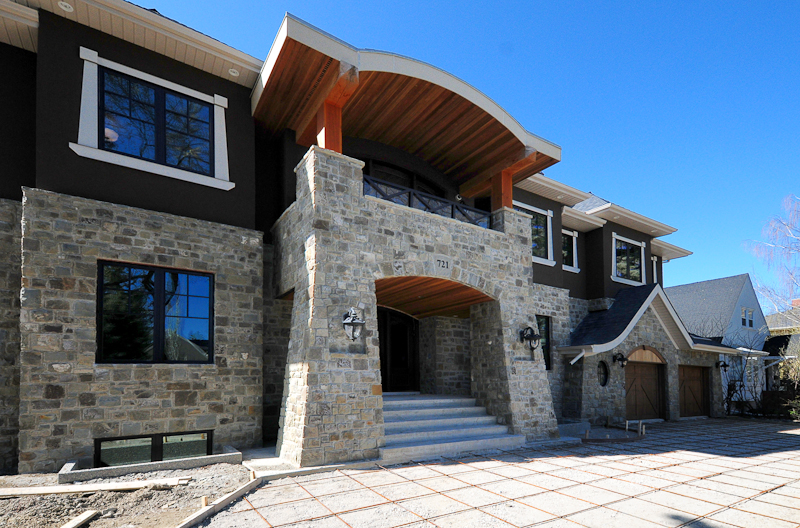
Canadians want more luxury homes, Re/Max says
By Canadian Press May 16, 2012
MISSISSAUGA, Ont. – The Re/Max real-estate sales organization says demand for high-priced housing was strong in most Canadian markets in the first months of this year, with records set in 10 of the 16 markets it tracks.
Vancouver was one of the six markets where the luxury market has cooled off after an especially hot period last year but demand in Toronto remained high.
The organization says the price of luxury housing depends on the market, from a low of $500,000 in such mid-sized cities as St. John’s, N.L., and Halifax to a high of $2 million in the Vancouver area.
In the case of Regina, which had the biggest increase in luxury sales this year, there was a 56 per cent more sales of at least $500,000.
In Canada’s most expensive market, Vancouver, there was a 31-per-cent decline from last year’s peak with 393 luxury homes sold in the first quarter.
By contrast, Toronto’s market has been hotter than last year, with 412 homes sold for at least $1.5 million each – a 49-per-cent increase from early 2011.
Friday, April 27, 2012
SAY NO TO WAR

Most Canadians would balk at bidding war
Sheila Dabu Nonato
Postmedia News Apr 19, 2012
About a quarter of Canadians say they are willing to enter into a “bidding war” in Canada’s housing market and pay up to 120% of the asking price, according to a BMO report released Thursday.
The BMO Buying Report said Canadian respondents in the Prairies, Ontario and Alberta are more willing to enter into a bidding war than those in Quebec and Atlantic Canada.
In the survey, 22% of Canadians said they were willing to enter into a bidding war when making an offer on a home.
“Of those prepared to fight, half would pay up to 110% of the asking price, while a quarter would be willing to bid up to 120%,” the report said.
Those surveyed in Manitoba/Saskatchewan ranked first in eagerness to enter into a mortgage bidding war (32%). They were followed by respondents in: Ontario (28%), Alberta (25%), B.C. (23%), Atlantic Canada (13%) and Quebec (10%).
The study also noted that 52% of Canadians surveyed said they’re willing to pay between 100 and 110% of the asking price, with Quebec ranking first at 62%. It was followed by: Alberta and B.C. (53%), Ontario (51%), Manitoba/Saskatchewan (48%) and Atlantic Canada (44%).
Meanwhile, 27% of Canadians said they would pay between 100 to 120%, with the highest in Atlantic Canada (33%), then Ontario and B.C. (30%), Quebec (25%), Manitoba/Saskatchewan (22%) and Alberta (17%).
John Pasalis, broker owner of Realosophy Realty Inc., a Toronto-area real estate brokerage, cautioned that the bidding wars may not be as lucrative as they seem.
“One thing to keep in mind is the houses that are getting pretty crazy bidding wars are underpriced anywhere from five to 10%,” he said. “The list prices aren’t always an indication of what they’re actually worth.”
Pasalis said his company has seen “multiple offers almost non-stop for years now,”including as much as 10 or more buyers bidding on a house.
“You just get these spikes and valleys in the market where things get a little bit more heated and demand starts outstripping supply as things get faster,” he explained.
However, the mortgage wars may backfire on owners if the bank’s appraisal of the home is lower than what a buyer pays for the home, he said.
To avoid this, Pasalis cautioned that homeowners need to know the actual market value of the property they want to buy as opposed to its listing price.
Nationally, the average home sale price is $369,677, the report said. The average home prices across Canada are “rising modestly,” it said, except in Toronto ($504,117) and Vancouver ($761,742).
“Toronto prices have risen 11% over the past year, while Vancouver’s have fallen 3%,” said Doug Porter, deputy chief economist for BMO Capital Markets.
The survey was completed online by Leger Marketing from March 19-22 with a sample of 1,000 Canadian home or condo owners. The margin of error is plus or minus 3.1%, 19 times out of 20.

Photo By: Kamilerner
Subscribe to:
Posts (Atom)